This guide exists to give you a clear, honest picture of what dental implants in Bali involve — the costs, the process, the quality considerations, and the questions you should be asking before you commit to anything.
For many Australians, dental implants sit in a frustrating place: necessary, but barely affordable. A single implant in Australia can cost $5,000 or more. Full-mouth restoration can run to $27,000, $40,000, or beyond. Waiting lists stretch out. Private health only covers a fraction. And so people delay, and the work that needs doing doesn't get done. Bali has become a genuine solution for a growing number of Australians — not as a shortcut or a gamble, but as a considered, well-supported alternative. Accredited clinics in Bali now serve thousands of international patients annually, with practitioners trained in postgraduate education within Australia, Europe, and the United States.
The cost difference is real. The quality, at the right clinics, is also real.
What Are Dental Implants? A Brief Overview
A dental implant is a titanium post surgically inserted into the jawbone to replace a missing tooth root. An abutment connects the post to a crown — the visible, tooth-shaped prosthetic that completes the replacement. The result, when done well, is a permanent, natural-looking tooth that functions like the original.
The procedure typically involves two or more stages over several months: the implant placement surgery, a healing period (osseointegration, where the implant fuses with the bone), and the fitting of the final crown. In some cases, temporary restorations are placed during healing.
Implants are considered the gold standard for tooth replacement — they preserve jawbone, don't require grinding down adjacent teeth (as bridges do), and with proper care, can last a lifetime.
Why Are Australians Choosing Bali for Dental Implants?
The cost gap is significant
The most direct answer is cost. In Australia, a single dental implant typically costs between $4,500 and $7,000, depending on complexity, location, and whether bone grafting is required. In Bali, the same procedure at an accredited clinic typically costs between $1,800 and $2,200 — a meaningful difference that is consistent across the major treatment categories.
For patients requiring multiple implants, full arches, or complex restorative work, the differential becomes transformative. A full mouth restoration that might cost up to $40,000 in Australia can be completed in Bali for a fraction of that — even accounting for flights, accommodation, and time off work.
The quality at accredited clinics is high
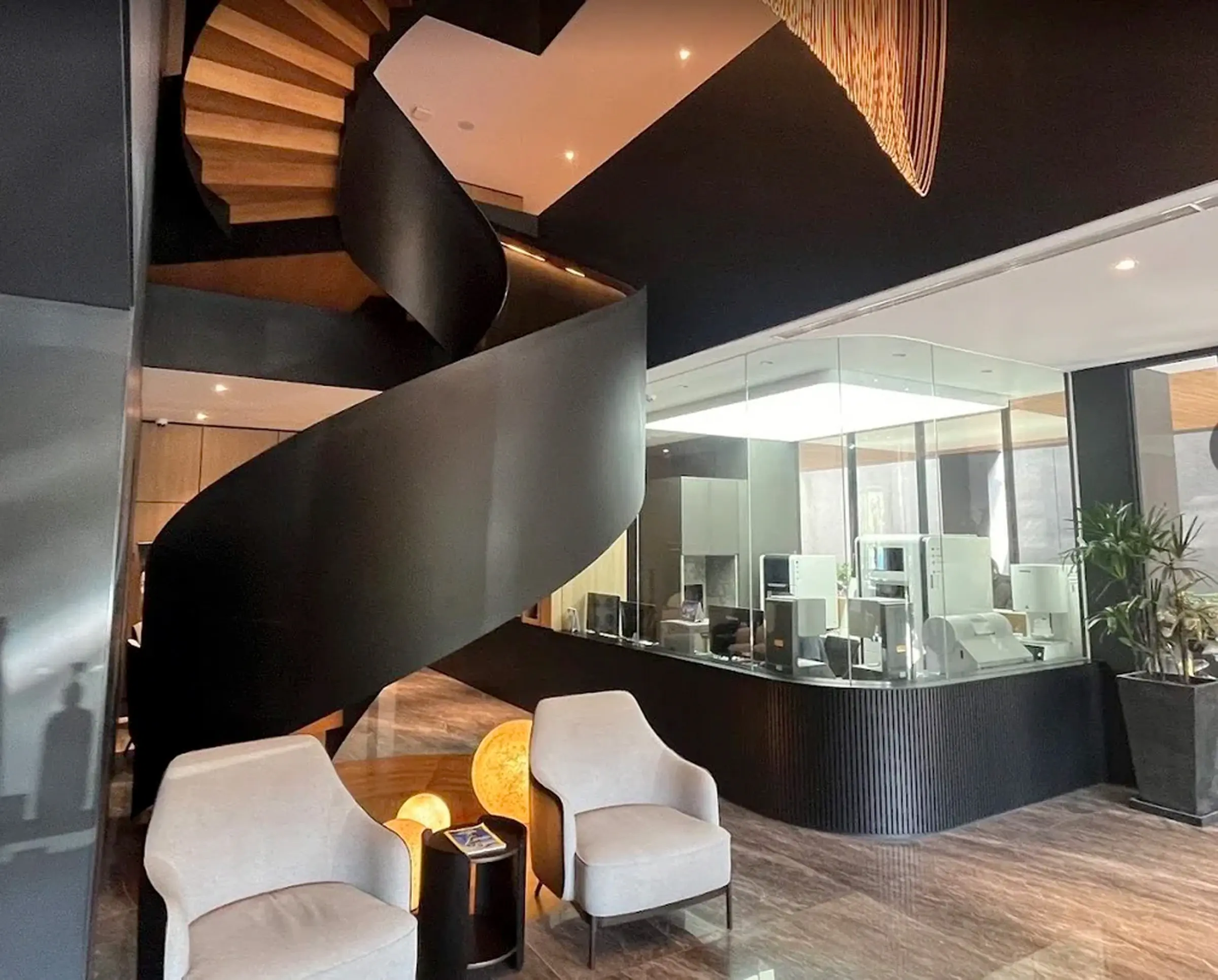
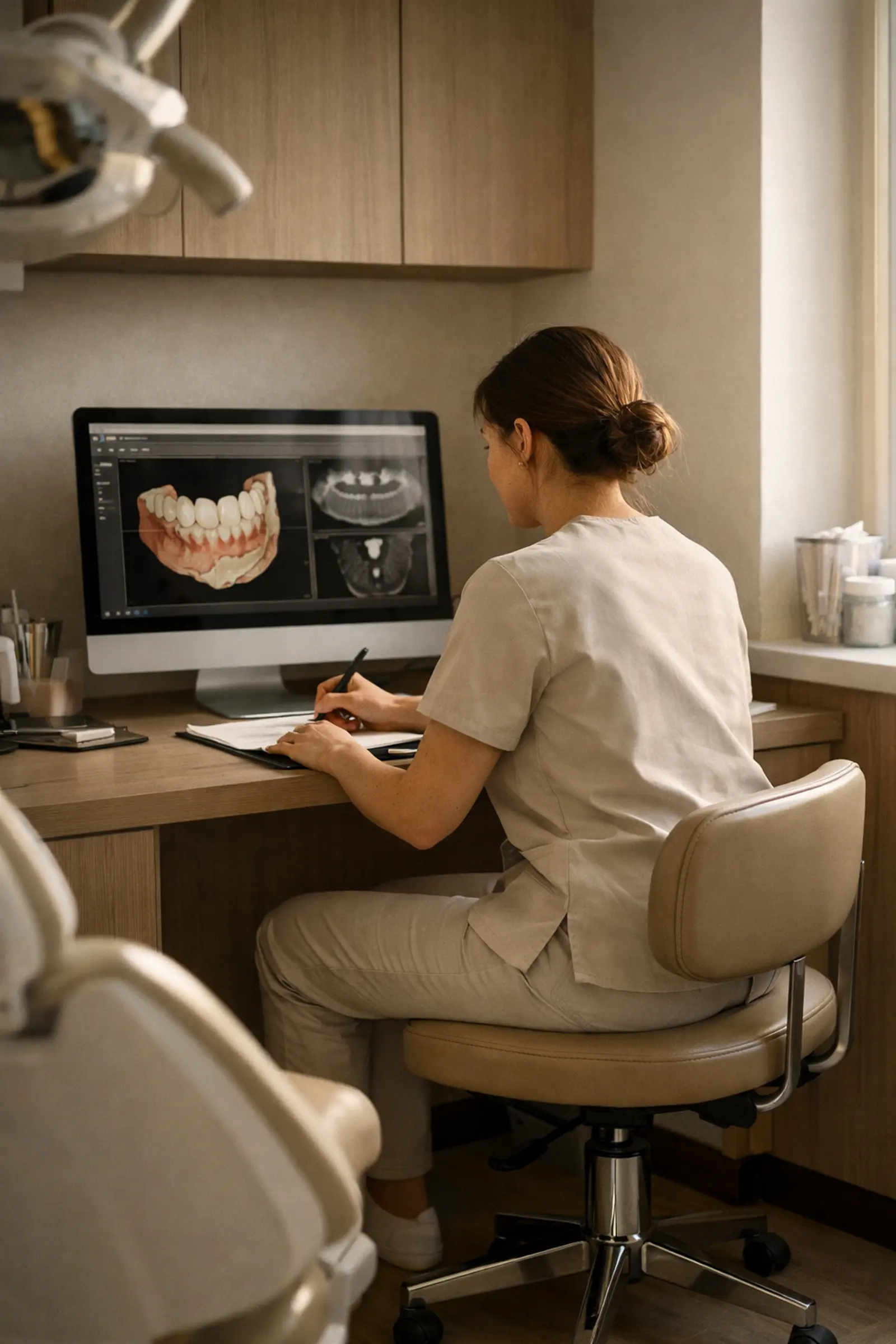
Cost savings only matter if the clinical outcome is sound. The reality is that many Bali dental clinics serving international patients operate to high standards. Practitioners at these clinics are frequently trained at accredited institutions in Australia, Europe, or the United States. They use the same major implant systems — Nobel Biocare, Straumann, Zimmer Biomet — used by Australian dentists. Digital imaging, 3D treatment planning, and sterile protocols are standard at established international clinics.
The key word is accredited. Not every clinic in Bali is equivalent. The quality differential between a clinic with an established international patient program and a walk-in street clinic is significant. At Dental Abroad, our accredited practices meet guidelines set out by Australia's private practice standards.
Australians already travel to Bali
There is also a practical dimension. Australians travel to Bali more than any other international destination. Direct flights from Sydney, Melbourne, Brisbane, and Perth are frequent and affordable. Accommodation is plentiful and well-priced. The idea of combining dental treatment with a week or two in Bali is, for many patients, less daunting than it might initially sound.
How Much Do Dental Implants Cost in Bali vs Australia?
The following prices are approximate and reflect 2026 market rates. Individual costs will vary based on clinical complexity, the specific implant system used, and whether additional procedures (bone grafting, sinus lifts) are required.
All prices in AUD. Approximate 2026 market rates. Costs vary by clinical complexity, implant system, and individual treatment needs. Always confirm current pricing in writing with your chosen provider.
What's included in Bali pricing?
At well-established international clinics, pricing typically includes the implant fixture, abutment, crown and associated surgical fees. Pre-treatment scans (OPG, CBCT) may be charged separately or included in a treatment package. Confirm inclusions in writing before proceeding.
What's the total cost of a Bali dental trip?
For context, a typical dental trip from Australia to Bali might include:
- Return flights (Sydney or Melbourne to Bali): $400–$700
- Accommodation (10–14 nights, mid-range): $700–$1,500
- Food, transport, and incidentals: $500–$800
A conservative all-in cost for a single implant trip might add $1,800–$2,500 to the procedure cost — still representing a significant saving compared to Australian prices for most patients requiring multiple implants or complex work.
How Do You Evaluate Clinic Quality?
What accreditation means
Accreditation is not a single, uniform standard — it varies by country and body. When evaluating a clinic for international dental work, look for:
- JCI / DA accreditation (Joint Commission International - Dental Abroad): The most rigorous international standard for healthcare facilities.
- ISO certification: Indicates quality management systems are in place.
- Affiliation with recognised implant system providers: Clinics that are authorised providers or training centres for major implant brands signal a higher standard of practice.
- Practitioner credentials: Look for clinicians with postgraduate implantology qualifications from recognised institutions, not just a dental degree.
What Dental Abroad looks for in partner clinics
Dental Abroad does not work with every clinic in Bali. Our partner selection process assesses clinical qualifications, facility standards, sterilisation protocols, implant systems used, patient communication processes, and complication management procedures. We verify these standards before patient referrals, and we review them on an ongoing basis.
This is the structural difference between booking dental treatment through a managed concierge and finding a clinic through a general search.
What Does the Implant Process Involve?
Stage 1: Treatment planning
Before any surgery, your treating dentist will conduct a thorough assessment including a clinical examination, CBCT (3D cone beam scan), and treatment planning discussion covering the number of implants, implant type, whether grafting is required, and timeline. For Dental Abroad patients, this process can begin remotely — you send existing X-rays and dental records, and we arrange a pre-treatment consultation before your trip.
Stage 2: Implant placement
Implant surgery is performed under local anaesthetic (IV sedation is available at many clinics for anxious patients). The titanium post is placed into the jawbone at the site of the missing tooth. In straightforward cases, this is a 30–90 minute procedure per implant. A healing cap or temporary crown may be placed immediately, depending on the protocol.
Stage 3: Osseointegration
The implant needs time to fuse with the jawbone — a process called osseointegration. This typically takes a minimum of 3–4 months, though implant systems and individual healing rates vary. During this period, you return home to Australia. Before you leave Bali, you'll receive comprehensive clinical documentation — everything your regular dentist needs to monitor healing and provide any follow-up care.
Stage 4: Crown fitting
Once osseointegration is confirmed, you return to Bali for the abutment placement and crown fitting. The crown is custom-fabricated (often in a local dental laboratory using CAD/CAM technology) to match your natural teeth in size, shape, and colour.
How many trips do I need?
For a standard single implant, most patients require two trips: one for placement, one for the crown fitting a minimum of 3–4 months later. Complex cases requiring bone grafting, multiple implants, or full-arch restorations may follow a different schedule — your treatment plan will specify this.
What to Expect During Recovery
Recovery from implant surgery is, for most patients, manageable. Common experiences in the days following surgery include swelling and mild bruising around the implant site (peaks at 48–72 hours), discomfort managed with over-the-counter pain relief, dietary restriction (soft foods for 1–2 weeks), and avoiding strenuous activity for a few days.
Serious complications — infection, implant failure, nerve involvement — are uncommon when surgery is performed by experienced practitioners at accredited facilities. Your treating clinic will provide detailed post-operative care instructions, and Dental Abroad remains a point of contact if you have questions during recovery.
Arranging follow-up care with your own Australian dentist is important — they can monitor the implant site during healing, and the clinical documentation from your treating clinic will give them everything they need to do this effectively.
How Dental Abroad Manages the Implant Process
Dental Abroad is not a dental clinic. We are a concierge pathway — we work with a curated network of accredited partner clinics in Bali and provide end-to-end coordination from your first enquiry through to post-treatment follow-up.
What this means in practice: we review your dental records and treatment needs before recommending a clinic; we arrange your pre-treatment consultation and full treatment plan; we coordinate your appointments and communicate with the clinic on your behalf; we are your point of contact if questions arise during or after treatment; and we prepare comprehensive clinical documentation for your Australian dentist, covering procedures performed, materials used and aftercare guidance.
This model is designed specifically to address the gaps that make self-directed dental tourism risky: unclear accountability, poor clinical continuity, and no structured support if something needs attention after you return home.
Frequently Asked Questions
Are dental implants in Bali safe for Australians?
Dental implants performed at accredited partner clinics in Bali are safe for Australian patients. The risk profile is comparable to the same procedures performed in Australia, provided the clinic meets appropriate standards. The risks of dental tourism arise primarily from self-directed bookings at unvetted facilities — not from the destination itself.
Do Bali dentists use the same implant brands as Australian dentists?
Yes. The leading dental clinics in Bali serving international patients use major global implant systems including Nobel Biocare, Straumann, and Zimmer Biomet — the same brands used by dentists and specialists across Australia and Europe. The implant system used will be specified in your treatment plan.
Will my Australian health insurance cover dental work in Bali?
Most Australian private health insurance dental extras cover is limited to treatment provided in Australia. For planned treatment in Bali, you should budget for the full cost without insurance offset, then check with your insurer on a case-by-case basis. Dental Abroad does offer a warranty on treatment for eligible cases — our policy information is accessible on our website.
What if something goes wrong after I return to Australia?
Before you leave Bali, you'll receive comprehensive clinical documentation — procedure records, materials used, implant specifications, and aftercare guidance — that your Australian dentist can use to assess and manage any concerns. For any clinical issue that arises, your first call should be your own dentist. If you need to communicate with the treating clinic, Dental Abroad can help you navigate that conversation.
How long do dental implants from Bali last?
Implant longevity depends on the implant system used, surgical technique, bone quality, and post-treatment care — not on where the procedure was performed. Well-placed implants using quality systems have a 95%+ survival rate at 10 years in peer-reviewed literature. With proper oral hygiene and regular dental check-ups, implants can last decades.
Can I get dental implants in one trip?
Immediate-load implants (where the crown is fitted the same day as surgery) are available in some cases — particularly for patients with sufficient bone volume and straightforward presentations. These protocols are not appropriate for all patients. Your pre-treatment assessment will determine whether an accelerated protocol is suitable.
How do I get started?
The first step is a free consultation with Dental Abroad. We review your dental records, discuss your treatment needs and goals, and provide a treatment pathway recommendation — including which partner clinic is best suited to your case, a cost estimate, and a timeline. There is no commitment required at this stage.
What about the quality of the crown — will it look natural?
Dental crowns fitted at accredited Bali clinics are fabricated using the same CAD/CAM and laboratory technology used in Australian practices. High-quality ceramic and zirconia crowns are standard. Shade matching is completed during the pre-fitting appointment. At the clinics we work with, the aesthetic outcome of crown work is consistently high.
Next Steps
If you're considering dental implants and want to understand whether Bali is the right option for your situation, the best first step is a conversation with our team. Dental Abroad offers a free, no-obligation consultation. We'll review your dental records, answer your questions honestly — including if we think a different pathway is better for you — and provide a clear picture of what treatment would involve.